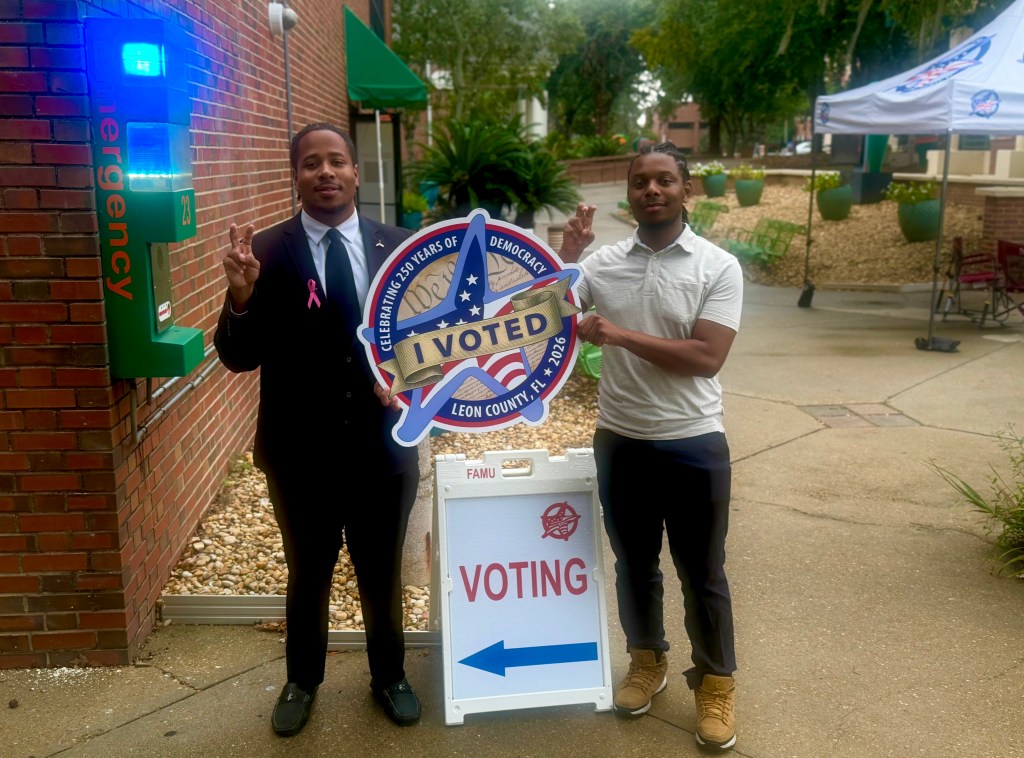
Safety, affordability and a desire to be heard give Florida A&M University students reasons to care about local elections, even as some question whether elected officials prioritize their needs.
Although many FAMU students come from different cities and states, their connection to Tallahassee shapes their interest in local elections.
While some see participation as a responsibility to the community, others question whether voting will help them get the support they need.
According to the Leon County Supervisor of Elections, all registered voters in the county can vote on its local ballot questions, giving college students registered in Leon County a say in those decisions.
Iyriana Lloyd, a sophomore philosophy student from Baltimore, Maryland, said she follows elections in both Florida and Maryland but pays closer attention to Florida politics while attending FAMU.
Still, she said finding jobs, financial assistance and support as an out-of-state student has been difficult.
“If you’re not from here, you’re put on the back burner,” Lloyd said.
Those experiences have led her to question whether politicians prioritize college students or longtime residents.
“Then what would be the extent of my vote because they wouldn’t be supporting me anyway,” Lloyd said.
Lloyd said she tried to register to vote in Florida but described the attempt as unsuccessful.
Denise Tate, a junior animal science student from Carthage, Mississippi, on a pre-veterinary track, believes that students should stay involved in local issues to help create opportunities for future FAMU students.
Tate said she pays attention to Tallahassee elections because local decisions affect her while she lives here. She also follows elections back home through conversations with family.
“I feel like there’s a disconnect between the community and the university,” Tate said.
Tate believes strengthening that relationship means considering how students can improve both FAMU and the surrounding community. Even those who leave after graduation should help create opportunities for those who remain, she said.
Tate encouraged upperclassmen to consider how they can support future students in Tallahassee.
“So, making sure that you, as a senior, [or] a junior, are doing what you can to help still provide opportunities,” Tate said.
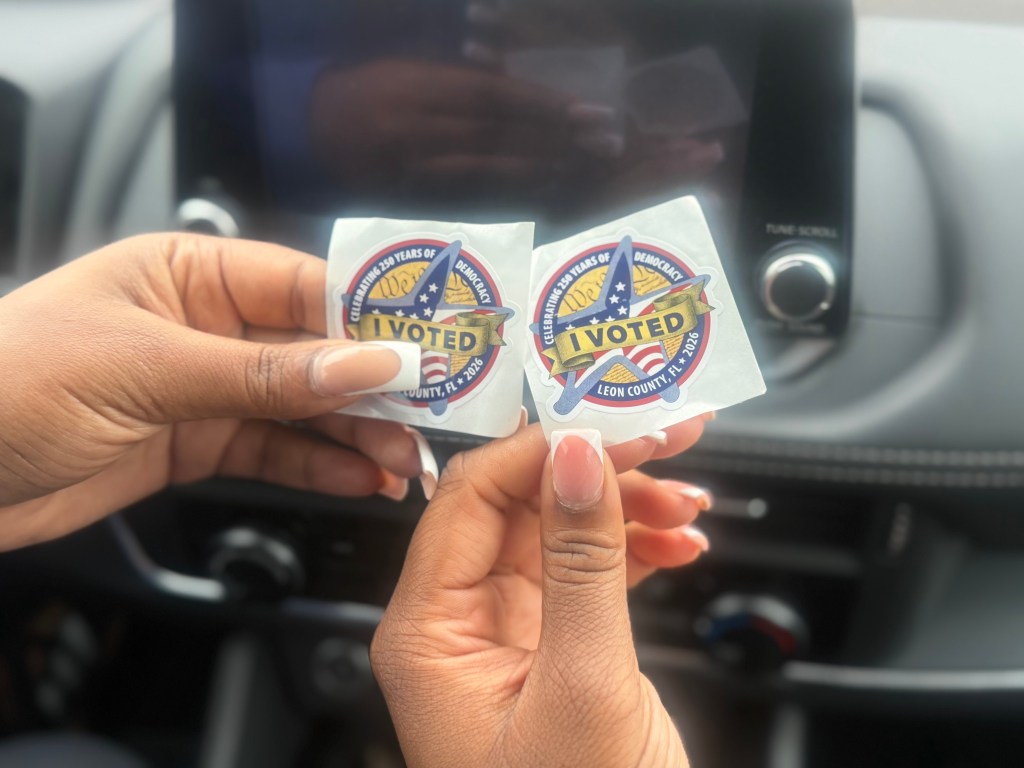
Tracary Cox, a third-year criminal justice scholar from Broward County, Florida, said his connection to Tallahassee gives him a reason to stay involved in local elections.
“I consider both places my home,” Cox said.
Cox said his connection to Tallahassee extends beyond attending classes. He described the city as a place where he has learned and grown personally, giving him a reason to care about Tallahassee’s future even after he leaves.
Registered to vote in Leon County, Cox explained that he follows Tallahassee politics more closely because he lives in the city while attending FAMU. Gun safety and the cost of living are among his priorities, though he questioned how seriously local leaders take students’ concerns.
“College students are often disregarded as still being children,” Cox said.
Despite those concerns, Cox believes participating in elections is a responsibility, particularly as a Black man from an immigrant family.
“The easiest part, personally for me, is getting up to go vote,” Cox said. “I don’t think I really have the luxury of being like, ‘Oh, this is too hard.’”

